Monday, March 4, 2013

Switched at Birth

Off-the-cuff thoughts on the Uprising episode, presented all in ASL (in no particular order):

1) Wow, Deaf President Now was 25 years ago?
1a) Wow... not one of the characters in the show (correction, not one of those students) would have been alive then.

I remember learning about DPN1 in my first ASL class as a reasonably recent event.
Ummm... my first ASL class was in 1996. Since then Gallaudet has had two other presidents.

1The Deaf students (and in short order, faculty, alumni and supporters) took a stand because the mostly-hearing board of Gallaudet chose of the three qualified candidates (two Deaf, one hearing-and-completely-non-signing), the hearing one. They wanted a Deaf president and a majority Deaf board. They also wanted the Board chair out. A quote (that she has persistently denied) supposedly was that "Deaf people cannot function in a hearing world." The Deaf wanted one of their own in leadership. After a week of boycotting classes, barring the gates, marching, and peaceful protest, I. King Jordan, one of the two Deaf candidates and a Gallaudet dean, was appointed the first Deaf president in the whole 100+ years of Gallaudet's history. The protest is remembered as one of the first times the general public was able to see that "Deaf people can do anything, except hear."

2) How many of the actors knew ASL before the show? How many know it now?

3) Is there anything Marlee Matlin can't do? Dancing with the Stars, negotiating with hostile high schoolers and a school board... I know she's the only Deaf actress with an Oscar, but sometimes I feel like she gets pulled out as "the" Deaf actress. I wonder if the Deaf are super-proud of her or tired of her being the only one?
3a) I miss Linda Bove. Do you remember her, from Sesame Street? I wonder how many kids she inspired to learn at least a little ASL? I wonder how many people she showed that you just treat her as a normal neighbor?

4) I really hate the camera angles where the signer's back is to the camera. Those over-the-shoulder shots where you need to see the reaction of the other person. Can't see the hands!

5) It's hard to watch hands when captions come onscreen! I usually have captions on but I'm not usually trying to read sign.
5a) Have you ever thought how hard it must be for a deaf kid to watch TV? To have to learn to read in order to watch a show? What a blessing we live now in an era of Skype and YouTube and other video conferencing software, that deaf kids don't have to learn to spell in order to "Say hi to Grandma, sweetie!"

6) Sucked in. Too bad there's only one episode left this season.

Think about it


source: Thought Questions

Switched at Birth goes all-ASL tonight!

ASL is tough to do on TV and in movies. To get a full-face view of the signer, it requires a lot of camera cuts. When I go to ASL socials, it's even difficult to follow a conversation with two people across a circle; it can get a bit like watching tennis. What usually happens for tv is an arty shot with everything voiced. It's enough for hearies to know "someone's signing". For example, in Mr Holland's Opus, when the principal is showing the parents around the Deaf school, she signs and speaks, but the visual is entirely in silhouette as the three adults walk, backlit, down a hallway. Or when Marlee Matlin does an interview, the default camera angle, as for most interviews, is a headshot. Her hands go in and out of frame, making it difficult to watch the signing. And where is her interpreter? Ostensibly to the side of the camera, which is not the same eye-gaze (direction) as looking at the interviewer.

BTW, it's tougher than you would think to voice and sign at the same time. The words don't come in the same order, for one thing. Personally, I consider voice interpreting, from ASL into English, significantly more difficult than interpreting English into ASL.

I say all this to help you appreciate the difficulty and the importance of tonight's Switched at Birth going all-ASL! Kudos to the showrunners for making this happen. Here's a compelling interview with the show creator, Lizzy Weiss.
The concept of the episode is 'this is what life is like for a deaf person.' Every scene has at least one deaf person in it, that was our rule. We would never cut away to two hearing people, because they wouldn't be signing to each other, and we wanted to keep our concept. I guess we could have done a scene from the POV of a deaf person of two hearing people talking, but then we would not have captioned the conversation; we would have shown what it's like to be deaf in a world in which most everyone speaks only. We do scenes all the time in which we sim com, so the challenge was to do something different. Once we struck upon the concept of 'this is from the perspective of a deaf person', our 'rules' fell into place.


Interview available at hitfix.com.
The Uprising episode of Switched at Birth airs on ABC Family (FIOS 199) at 8p tonight, Monday, March 4, 2013.

Full disclosure:
I have followed TV columnist Alan Sepinwall since I started compulsively following Chuck. I enjoy his insights and am glad for his access to showrunners and writers, but I particularly enjoy his interactions with the fanbases.
FWIW, I have not followed Switched at Birth to this point. But I am very excited for today's episode and I hope it engages me enough to continue to watch the show.
+++++++++++++
Update:
Additional info:
Huffington Post article

ASL-interpreted Theater, part 2 - Idioms and translating

Many moons ago, I watched the movie Cats while hanging out at a friend's house. Kind of. I fell asleep somewhere in the middle of the first act and made my excuses to go home at intermission. As I recall, my general impression was that James Earl Jones1 dressed up as a fat cat2 and all the cats sang about themselves. And the one song I'd heard of before, Memory, was evidently in the second act because I didn't get that far.

1 It wasn't James Earl Jones.
2 Not rich, just literally fat. And a cat. A really big, fat cat.


So, not my favorite musical.

But I only get asked to interpret one musical per year.
And I don't get to choose what show they do at CVHS, although I keep dropping suggestions3.
Thing is, I'm not actually an interpreter by trade. I'm a church terp, which is to say, I'm a hack. I'm not state-certified. But when you're doing the terping as a labour of love5 and not for pay, even a hack can get in on the action. My co-terp graciously says I'm a very gifted hack. And I like doing the theater pieces.

3 Aida! Elton John's Aida! But as passionate as I am about that show4, the CVHS director has told me every year that they intentionally choose shows with big casts and lots of leads. And Aida has... three.
4 And about Elton.
5 I put the "u" in labour because I felt British. More about that later.


But whereas I knew Les Mis going into that show, I did not know Cats at all. So my co-terp and I started with the soundtrack. Get it into your head6. For those that didn't know, the entire plot of Cats is that this group of cats8 hang out together and sing-act-perform-show off in hopes of being chosen the one cat per year who gets to go to the Heavyside Layer, which ostensibly is Cat Heaven. The source material is a book of poetry by TS Eliot; each poem describes one cat.

6 Apologies to Big Frog, who also got Cats into his head. Three years later, he still occasionally breaks into "I have a gumby cat in mind/her name is JennyAnyDots. He, like I, has always been succeptible to Broadway Tourettes.7
7 Thanks to Garrison Keillor, A Prairie Home Companion, and Guy Noir for that diagnosis. Full transcript and audio available here.
8 Is there a collective noun for cats?


So the translation work was tougher than expected because there were far more steps than usual. From Poetry to Prose, but it was in British. Then from British to American, from American to ASL. Wiki is your friend. Wiki is your friend. Wiki is your friend.

Here are several unexpecteds we found:
1) Beau Brummell was an arbiter of fashion in 19th century England. The cat Bustopher Jones was "this Brummell of cats" because his markings looked like a suit with spats. Fortunately we knew what spats were in a wearable sense, as opposed to in a catfight sense, because Bustopher Jones certainly wouldn't stoop to that.
2) The cat Gus's real name is "Asparagus, but that's such a fuss to pronounce" translated remarkably simply to A-S-P-A-R-A-G-U-S FINGERSPELL (stare at hand, hit hand to show misspell, look perplexed).
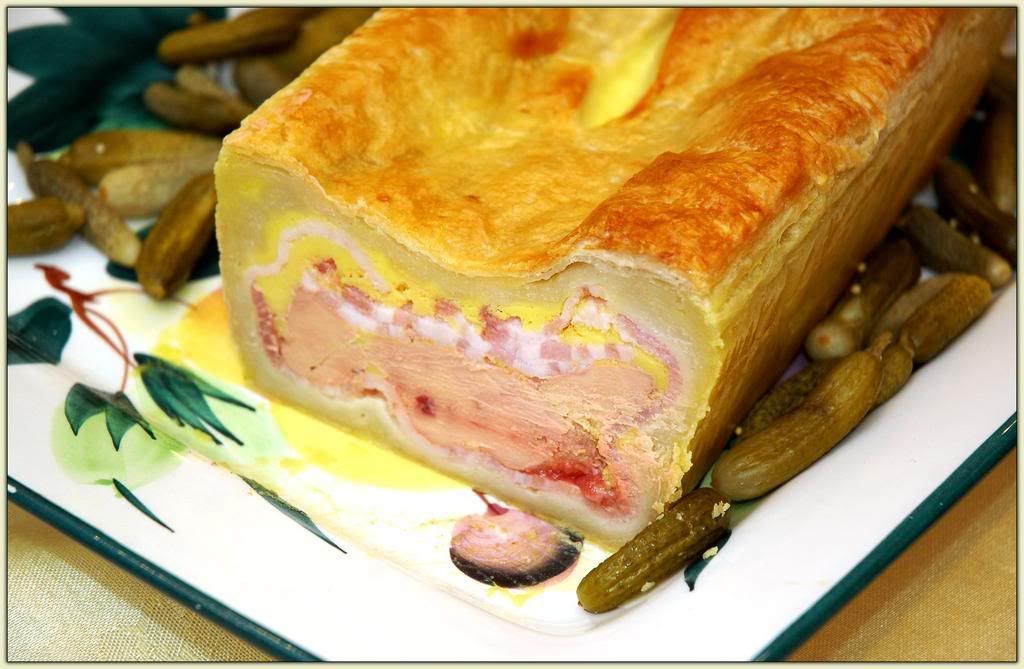
3) Strasburg pie goes straight into the category of "don't eat British foods". According to The Ad-dressing of Cats, like caviar, one would use it to tempt a cat. But it's duck foie gras, wrapped in bacon, wrapped in puff pastry, served on a bed of pickles.

Ewwwwwwwwwww.
4) Know your audience. We made the decision to do a "Vanna White" for when Old Deuteronomy progressed up the opposite-side aisle because the lyrics were the same thing about 20x: murmurs of disbelief and "I believe it is Old Deuteronomy." He moved slowly and had a lot of cats delighted to see him. But our Deaf wanted to know what was being said. Our decision was to not sign the same thing over and over. But we should have at least indicated that the same words were being repeated ad nauseum.
5) Mind your edges. Cats is an all-aisles-used show. Actors in full cat mode were prowling up center aisles, side aisles, dancing their way into the audience. If they were human characters, the actors would have walked up the middle of the aisle. But cats slink around edges and between seats. And they demand attention. They want to be petted behind the ears. But only with their timing. And if you pull their tails, nothing good can come of it.


PS In personal growth, I've learned html for italics and superscript. So hopefully this makes my ramblings easier to track out of and back into the text.

ASL-interpreted Theater, part 3 - Sharing the words or sharing the experience?

The music is iconic.


What's Phantom without that pipe organ?

But what if you can't hear the music? If you are, in fact, Deaf or hard of hearing and attending interpreted theater?

So how can the interpreters translate that theme music into something tactile?

It's not in ASL.
There's no sign for pipe organ that shows the intensity of that music.
Even facial expressions can't convey it.
So what to do?

Wait for it...

.

.

.

.

.

.

.

.

.

.

.


Hasn't everyone, at some point, hummed into a balloon just to feel the vibrations against their hands?
Like sitting on an amplifier, holding the black balloons translated the music into something tactile.

It's not all signs, it's communicating what's happening.

Sunday, March 3, 2013

What prep goes into ASL-interpreted theater?

Five years ago at Christmastime, I got a slightly random email from "your friendly neighborhood interpreter", asking me if I wanted to do Les Misérables with him.

If anyone asks you if you want to do Les Mis, DO IT! How often does an opportunity like that roll around?

My love of Les Mis began in San Francisco when I was 8 years old. While my parents and brother and I were on our triennial* visit to the Left Coast, my uncle had a surprise for the whole extended family. He had a friend who had connections, and a group of about 30 of us, family and work friends and neighborhood friends, had tickets to see a (traveling?) production. Evidently he had been prepping his kids for this for awhile; my cousins already could sing several key numbers, and who spent the intervening week trying to teach me On My Own**.

*Triennial: every three years. Not to be confused with triannual, which is three times per year.

** Which is still my favorite Les Mis song.

I think it might have been the first professional production I ever saw -- my family had yet to go to Toby's***, even. Our seats were in the second balcony of a theater that (to an 8yo) looked like it seated thousands, possibly the entire local population. I wanted to rent opera glasses, for no reason other than they were strapped to the back of the seat in front of me, available for rent for "one silver quarter".

*** For those that don't know, my parents have volunteered for years at Toby's, the Dinner Theatre of Columbia, processing door prizes. They've also taken countless groups to shows. And lest you disparage it as "just" dinner theater, Toby's actors have gone into Broadway, the Capitol Steps, Nashville, etc. And there are few youth in Howard County who haven't been impacted by their training programs for teens. Also, Toby's is nominated for nine Helen Hayes Awards**** this year, eight of which are for The Color Purple.

**** The regional version of the Tony's.

The show overwhelmed me. I was most impacted by (SPOILER ALERT) the rotating stage, the emergence of the barricade, and the visual of the bridge rising as Javert jumped into the river. I guess that was an early hint that my future was in tech theater, not on the acting end of things. But coming out of the show, and remember I was only eight, I told my parents that I wanted to be the child Cosette and the adult Eponine.

Fast forward twenty years to my co-terp's email.

As an interpreter, I don't have to choose Cosette or Eponine. I get to be BOTH.

With one guy and one girl interpreting, I got to be not only child Cosette and adult Eponine, but also Fantine, Mme Thenardier, adult Cosette, basically every female onstage. Really, half the characters in total, including Javert. So cool! If you're keeping track and you know your Les Mis, you may have noticed that this means also (SPOILERS) three BIG death scenes. THREE. In one show. And not just in a Mad Mechanicals "Act 3: Everyone Dies" simplification, either. THREE. DEATHS. Big ole drama. I Dreamed a Dream, A Little Drop of Rain, and Javert's Suicide. Soooooo COOOOOOOOLLLLLLLLL! Let me tell you, that would never happen if I were an actor.

But I didn't know that yet. I had one email at Christmastime saying "are you interested?" And then silence as my co-terp left after Christmas break to go to Tennesee. Where he lives. And I live in Pennsylvania. And the high school we were interpreting for is also in PA. Further complicating things, he's an alumnus of the school, and I had no contacts at all there. And he's not exactly the most plan-ahead-ish kind of guy. So after months of silence, I got a phonecall on a Monday saying, "So, are you still interested in terping Les Mis? If so, I'm in town and if you can join me at the high school tonight we can start practicing. Our show is Thursday."

To quote Papa Bear in The Bike Lesson, "This is what you should not do. Let that be a lesson to you."

Fortunately, I knew Les Mis inside and outside and upside down. Well, I could sing all the alto parts anyways. Four years of high school choir will do that to you. Oh, and Madame taught us "J'Avais Rêve"*****, the French version of "I Dreamed a Dream". Which is not a word for word translation. Remember this concept when we get to talking about ASL interpreting.

***** Oh so much darker in French! The English is "I dreamed a dream in time gone by/When hope was high and life worth living/I dreamed that love would never die/I dreamed that God would be forgiving." The French translates back to English as "I dreamed of another life/But life killed my dreams/As one snuffs out the cries/Of an animal one's killing..."

The interpreted show went off remarkably well on three days' rehearsal. On such a timeframe, the biggest part was get the soundtrack into my head. CDs in the car, scripts with me everywhere I went, and just go for it! Again, good thing I knew the story and the characters and was emotionally connected with them going into things.

The main thing I had to keep in mind was that I was communicating what was going on onstage. Once the words were reinforced in my head, I worked on getting my hands to keep pace with the phrasing (but not the words! English to ASL is never word for word!). It was freeing for me to remember to get ahead sometimes and simply "Vanna White"****** at the stage. For example (SPOILERS), at those most-impactful pieces for me: the revolving stage, the emergence of the barricade, and the jump off the bridge. Also, counterpoint. With four hands, we mostly picked up all that was going on onstage. But at the close of Act 1, One Day More has six different stories going on. Not six voices, six stories. Every single character is onstage singing their heart out. There's Marius/Cosette, Eponine, Valjean, Javert, M/Mme Thenardier, and the students. But what's being expressed is that change is on the way. The hearing audience ******* doesn't pick up every single word, either, just an impression of everyone singing about tomorrow and what will happen to them. So as terps, we caught what we could and left what we couldn't get to... and kept shoulder-shifting.

****** Flourish. C'mon, if you didn't know what I meant, you need to watch more TV.

******* "Hearies"

Wait, "What's shoulder-shifting?", you ask? Picture a comic strip. You have a character in each corner in the first panel, but in the second panel there's just words. Who's saying it? All you need is the barest indication of the direction from which the words come. You don't need to draw the character again. Or in a list of pros and cons, or any comparison sheet. You don't need to label every single statement, just indicate which side it's on. That's as simple as shoulder shifting is. You create characters near and far, left and right, and suddenly you can have a dialogue that expresses clearly who says what.

Of course, it's easier if you know your source material going into things like we did with Les Mis. This clearly is going to become a multipart post, but just a heads-up, this year's interpreted show is Grease, at CVHS, 1p on Tues 4/9. Our matinee is technically the final dress rehearsal, so it is unticketed, but if you come we expect you to sit in the Deaf section, towards the front, to SUPPORT INTERPRETED THEATER. Donations accepted, and support the CVHS music department. Let me go a step beyond that. Donations are encouraged, even expected. At CV, the show always sells out, and tickets go for $12 adults/$10 seniors/students.